
Call-out fee: $80–$180
What most Sydney plumbers charge to attend. Ask for it on the phone. Anyone who will not name it is telling you something.
The first thing that happens is not a booking. It is a plumber telling you what to shut off right now, because the minutes before anyone arrives are where most of the damage is either done or prevented.
The honest test is whether it is still getting worse while you wait. Water, waste or gas going somewhere it should not, and not stopping. A burst pipe, sewage backing up into the shower, a hot water tank emptying through the ceiling, or any smell of gas: those are emergencies, and waiting until morning multiplies the damage bill.
Then there is the category people apologise for calling about: the only toilet in the house blocked, no hot water with a newborn, a drain backing up the night before an inspection. Call anyway. An after-hours call here reaches a plumber, not a promise of one tomorrow.
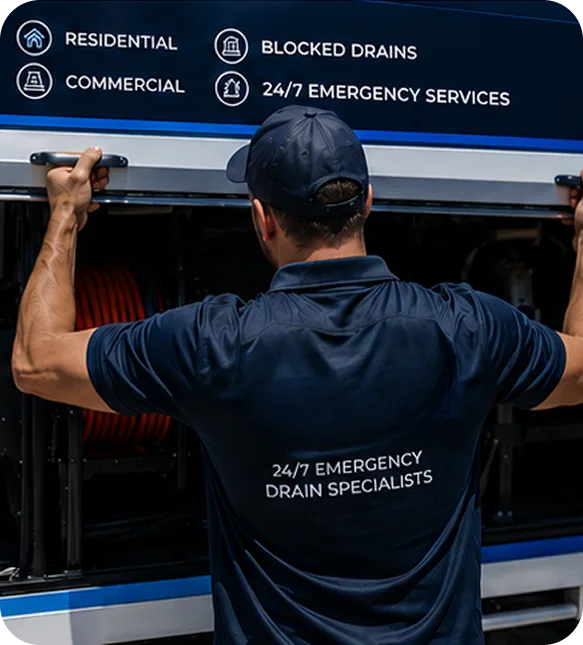

The genuine emergency in an older home is often not the size of the fault but the lack of an alternative. A single bathroom out of action with a family in the house is a call-out, whatever the textbook says about severity.
Liverpool is South-West Sydney’s major centre (postcode 2170), set beside the Georges River and bordered by Casula, Moorebank and Warwick Farm. Founded in 1810, it layers heritage cottages and a historic town grid beneath a fast-growing high-rise CBD, old drains carrying very modern loads.
We treat it that way. If it is the only toilet, it goes to the front of the queue — and if we can talk you through getting it usable tonight so the visit can happen at daytime rates tomorrow, we will do that instead and say so on the phone.
Grease does not block a line suddenly. It narrows it over months, and the failure arrives on the night of the highest load — a full service, a function, a long weekend.
Restaurants and food courts through the Liverpool CBD push heavy grease loads into ageing lines, building chokes that need jetting to shift.
That is why the useful question after a commercial blockage is not what went down the sink tonight, but when the trap was last pumped and the line last jetted. We will give you both dates from what the camera shows, and a realistic interval to keep to.
Two separate systems run under most properties around Liverpool: stormwater, which takes rain from roofs and yards, and sewer, which takes everything from inside the house. They are not supposed to meet.
Flat clay country beside the river drains slowly, so saturated ground shifts pipes and stormwater lines stay loaded long after rain stops.
When they do — an illegal connection, a cracked line, a surcharging pit finding its way into the wrong pipe — heavy rain overwhelms a system never built for it, and the symptoms appear indoors. Working out which system has actually failed is the first thing we do, because the repair, the cost and who is responsible all follow from it.
An after-hours visit is about making it safe and usable: clear the blockage, get the fixtures working, and stop anything overflowing. That is nearly always achievable.
What does not happen at midnight is a structural repair. If the camera shows a cracked or root-filled run, you will hear that on the night with the options, and the actual fix is booked in daylight when it can be done properly.
Mature figs and gums through Liverpool’s established streets probe sewer joints relentlessly, matting roots across the pipe bore.
Root intrusion almost never causes a sudden emergency. It causes a slow narrowing, and then one ordinary Tuesday the last few millimetres close and everything backs up at once. That is why the call feels sudden when the cause is not.
Clearing it tonight is the right move and it is not the end of the story. Ask for the camera run afterwards, because the interval before the next one is set by how open the joint is, not by anything the household did.
Around Liverpool we work with premises where closing for a day is not a small inconvenience — it is the week's takings and a shift's wages.
So we work to the opening time, not to ours. That means arriving after close where that suits you better, telling you early if the fix will not hold until trade, and giving you the documentation your insurer or landlord will ask for afterwards.
What most Sydney plumbers charge to attend. Ask for it on the phone. Anyone who will not name it is telling you something.
Against roughly $120–$160 in business hours. Nights, weekends and public holidays sit at the top of the range.
Call-out, the first stretch of labour and minor parts, for the common jobs: an isolated burst, a blocked toilet, a failed valve.
Slab leaks, gas line faults and anything needing walls opened at 2am climb quickly. You hear the number before we start, not after.
If it can genuinely hold, isolated, contained, water off, we will say so on the phone and book you at daylight rates instead.
Indicative Sydney ranges for 2026. Your job gets a fixed figure before anything begins. Figures here are indicative of the 2026 Sydney market rather than a quote from us, you get your own number as a fixed price before any work starts.

Not a call centre. You describe what is happening, we tell you what to shut off right now, and whether this genuinely needs someone tonight. Sometimes it does not, and we say so.
The nearest available crew heads for Liverpool with the common failure points already stocked on the van: pipe, fittings, valves, drain gear.
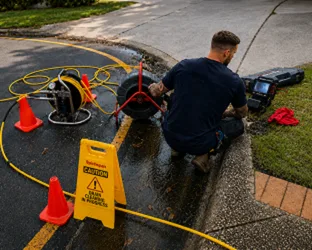
First job on site is stopping the damage: isolate, contain, make safe. Then you get a fixed price for the proper repair before it starts.

Most emergencies are permanently repaired on the spot. If a part has to wait for a supplier, you are left safe, watertight and functioning in the meantime.
Describe what it is doing and we will tell you honestly whether it needs a van now or costs less on Monday.
Call for the fastest response, any hour. Or send the form, after-hours enquiries get a callback from the on-call plumber, not an inbox.

Leave your details and our local Liverpool team will call you back fast.